



Singapore’s First Multi-Storey 3D-Printed House
QR3D, Singapore’s first 3D-printed house featuring a unique multi-layered concrete structure, stands out with a sculptural void at its center that serves both as an aesthetic focal point and a means of natural ventilation. This four-storey house is constructed with more than 90% 3D-printed materials, marking a new milestone in construction technology.
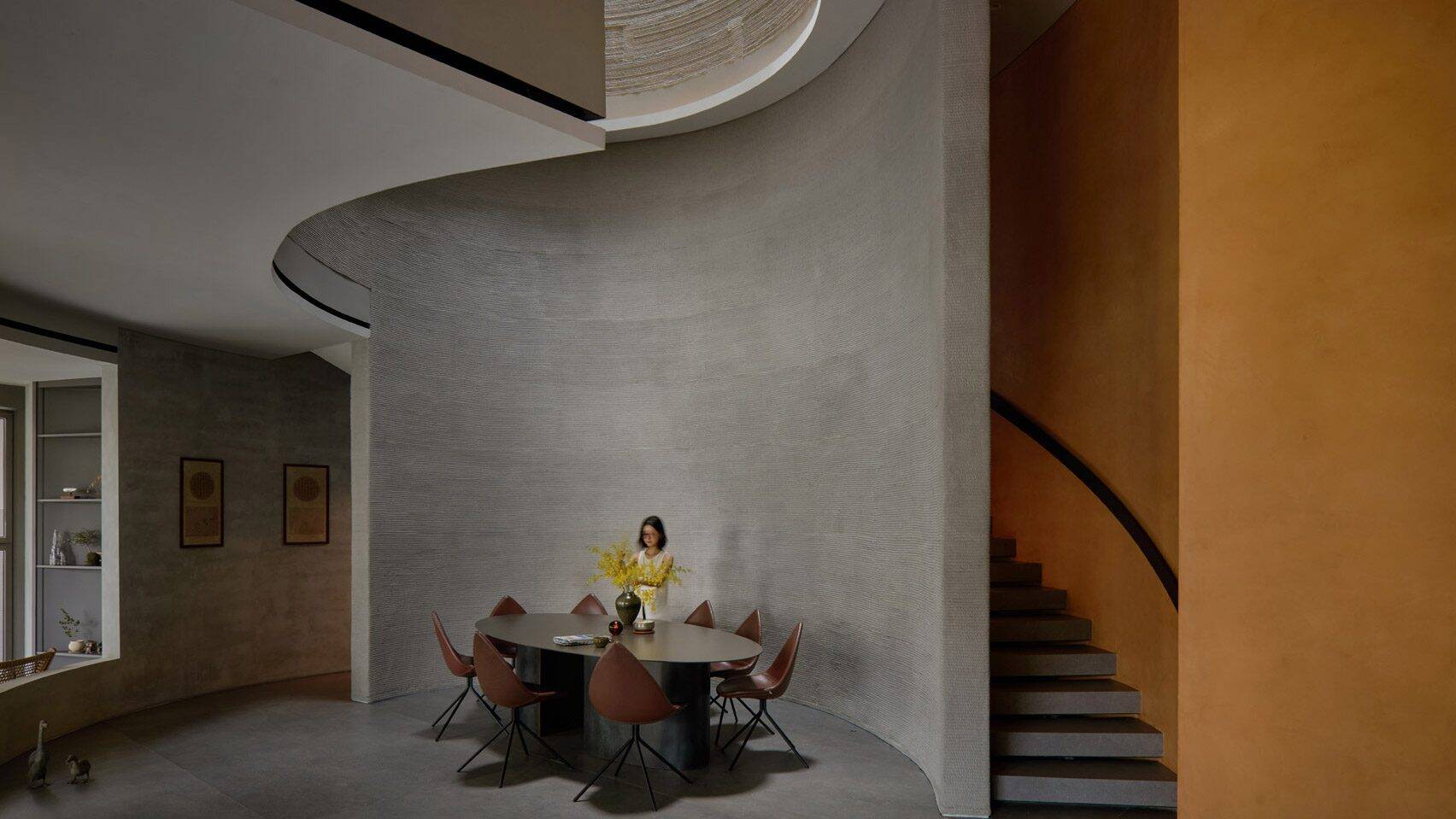
90% of the house is made from 3D-printed materials
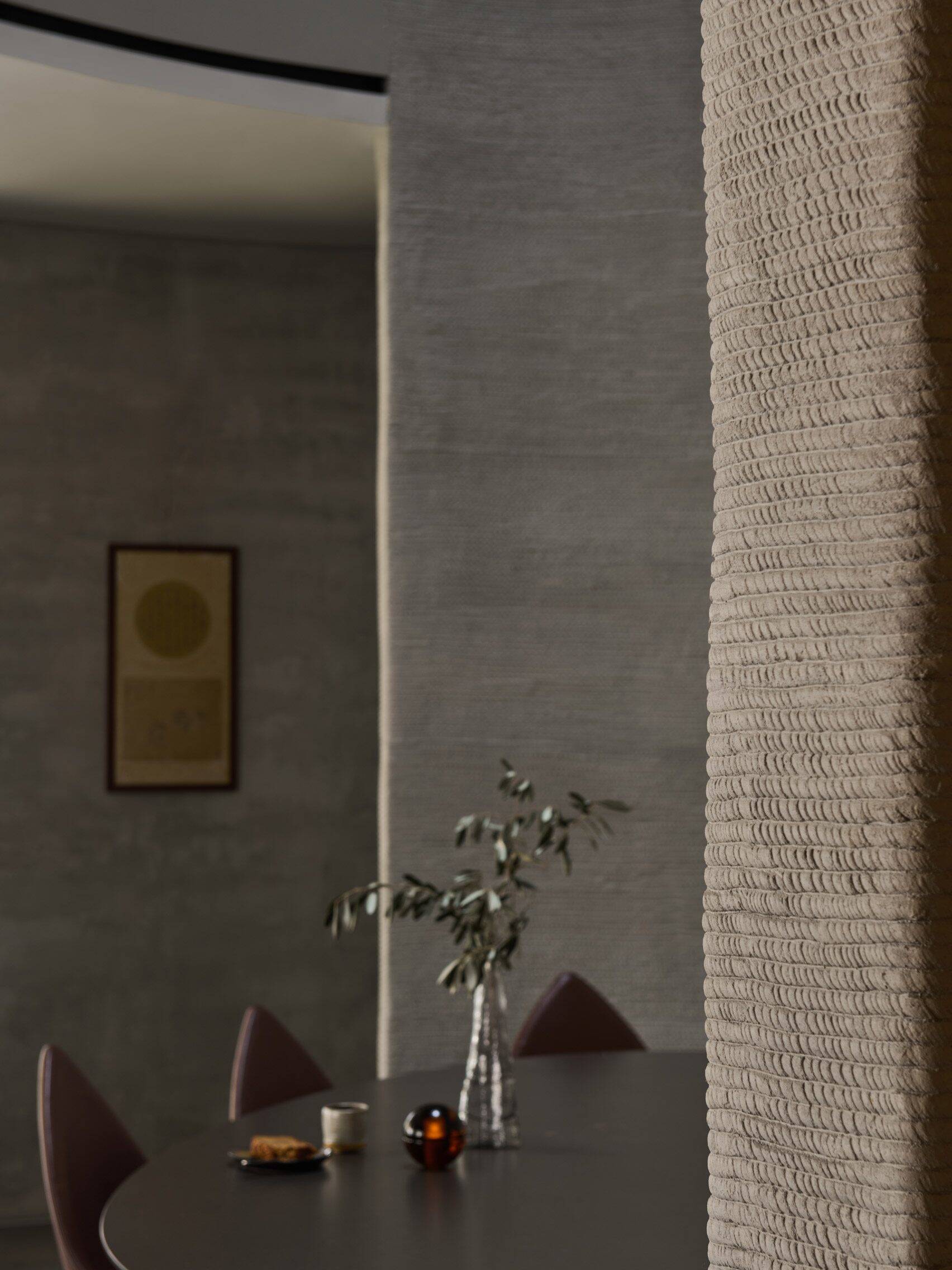
Built using 3D-printed concrete, both the façade and interior walls display distinctive layered concrete textures, celebrating the raw materiality and the authenticity of the 3D printing process.
Foldable window panels create a semi-outdoor porch at the front of the house, allowing abundant natural light to flow into the interior spaces.
The front of the house features a semi-open terrace
At the heart of the house, an oval-shaped sculptural void is suspended above the dining area. This striking design recalls the neo-classical house from the 1990s that once stood on the site, while also functioning as a passive cooling system—channeling hot air upward and expelling it through concealed exhaust fans. Daylight from the skylight filters through the opening, casting dynamic shadows that move across the floors throughout the day.
The circular opening at the center also functions as a cooling system
The main living and dining areas of QR3D are located on the ground floor, while the upper floors are dedicated to bedrooms and private workspaces. On these upper levels, long and narrow windows carved into the façade ensure privacy for the homeowners while helping the building remain cool in Singapore’s hot and humid climate.
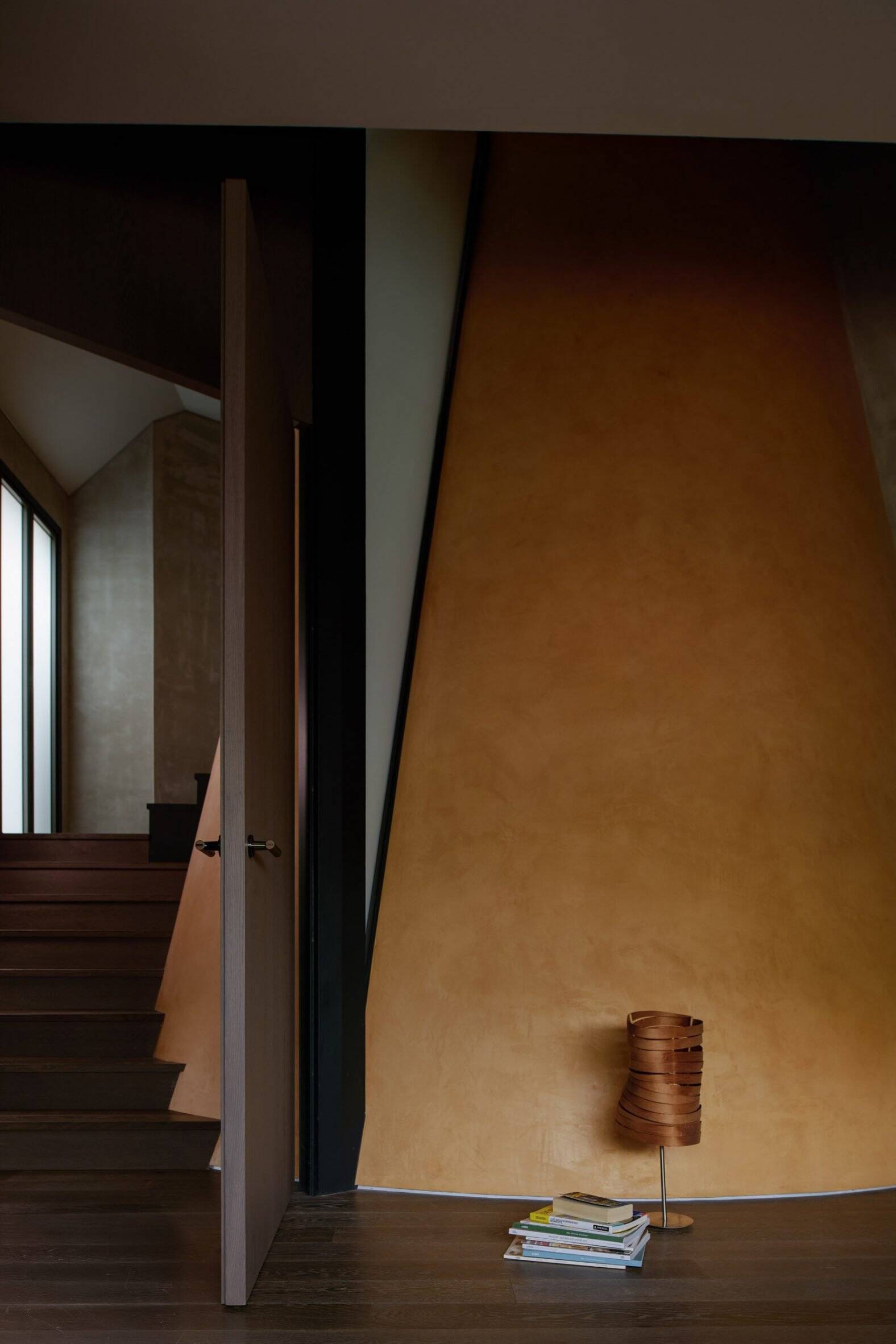
The ground floor serves as the main living area
“While we are excited about the novelty of 3D printing technology, our goal has always been to create a family home that will be valued and cherished for decades to come,” the architect shared. “We did not want the technology to overshadow the essence of a home.”
The design team intentionally followed a traditional architectural design process, with adjustments made to accommodate 3D printing technology.
“Although we began the design as we would for a conventionally built house, we had to invest significantly more resources in refining and developing the design to ensure it could be 3D printed,” the architect explained.
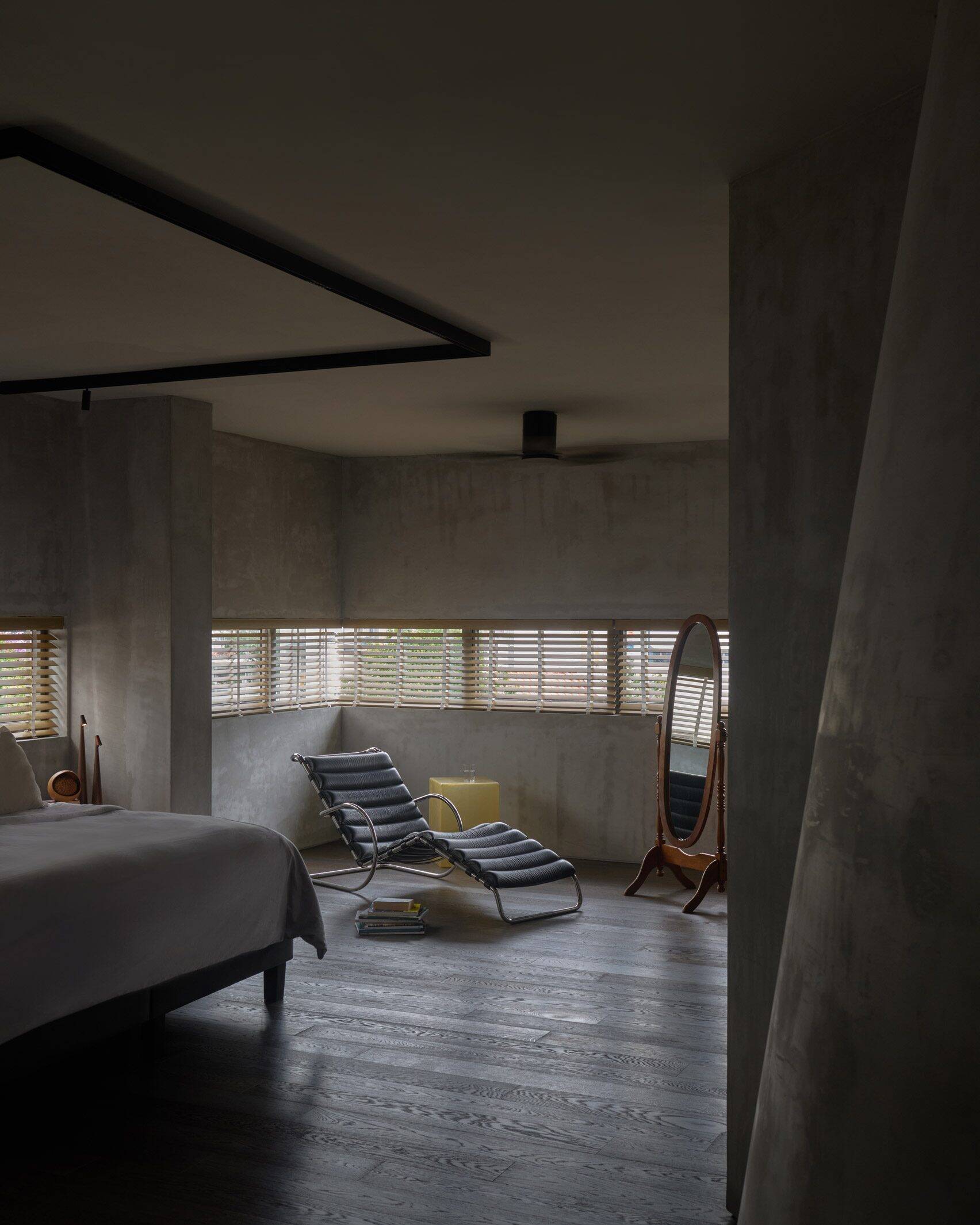
Bedrooms are located on the upper floors
These adjustments included integrating waterproofing details between doors, windows, and the 3D-printed walls, as well as restructuring the structural design to account for the load of the printing arm on the upper levels. The printed “brick” elements for the skylight also had to be modified due to their steep inclination.
Some components were pre-printed off-site, as the narrow urban plot did not provide sufficient space for the 3D printer to move freely. Off-site printing also helped protect the equipment from unpredictable weather conditions and Singapore’s tropical climate.
The circular skylight structure at the center connects all floors
Through this project, the architects aim to demonstrate how 3D printing technology can reshape cities—as a viable and transformative solution for the built environment, offering advantages such as reduced labor requirements, lower construction waste, and minimized environmental impact.
“Although 3D printing technology in construction is no longer new in Singapore, until now it has mainly been applied to small, utilitarian elements such as decorative walls, planters, or prefabricated bathrooms in high-rise residential projects,” the architect added.
3D-printed materials create a raw, unique, and tactile texture
The architect proudly concluded: “We have now demonstrated how it can be used to ‘print’ an entire building—the first complete multi-storey 3D-printed house in Singapore. This represents a major step forward in applying the technology, opening up a future where architecture advances technically while remaining deeply connected to human experience.”