



Understanding Career Stages in Engineering: A Roadmap for Growth
In the ever-evolving field of engineering, career progression is not just a matter of time—it is a structured journey of developing competencies, gaining experience, and expanding professional responsibility. Understanding the typical career stages can help both individuals and organizations align expectations, plan development pathways, and foster long-term success.
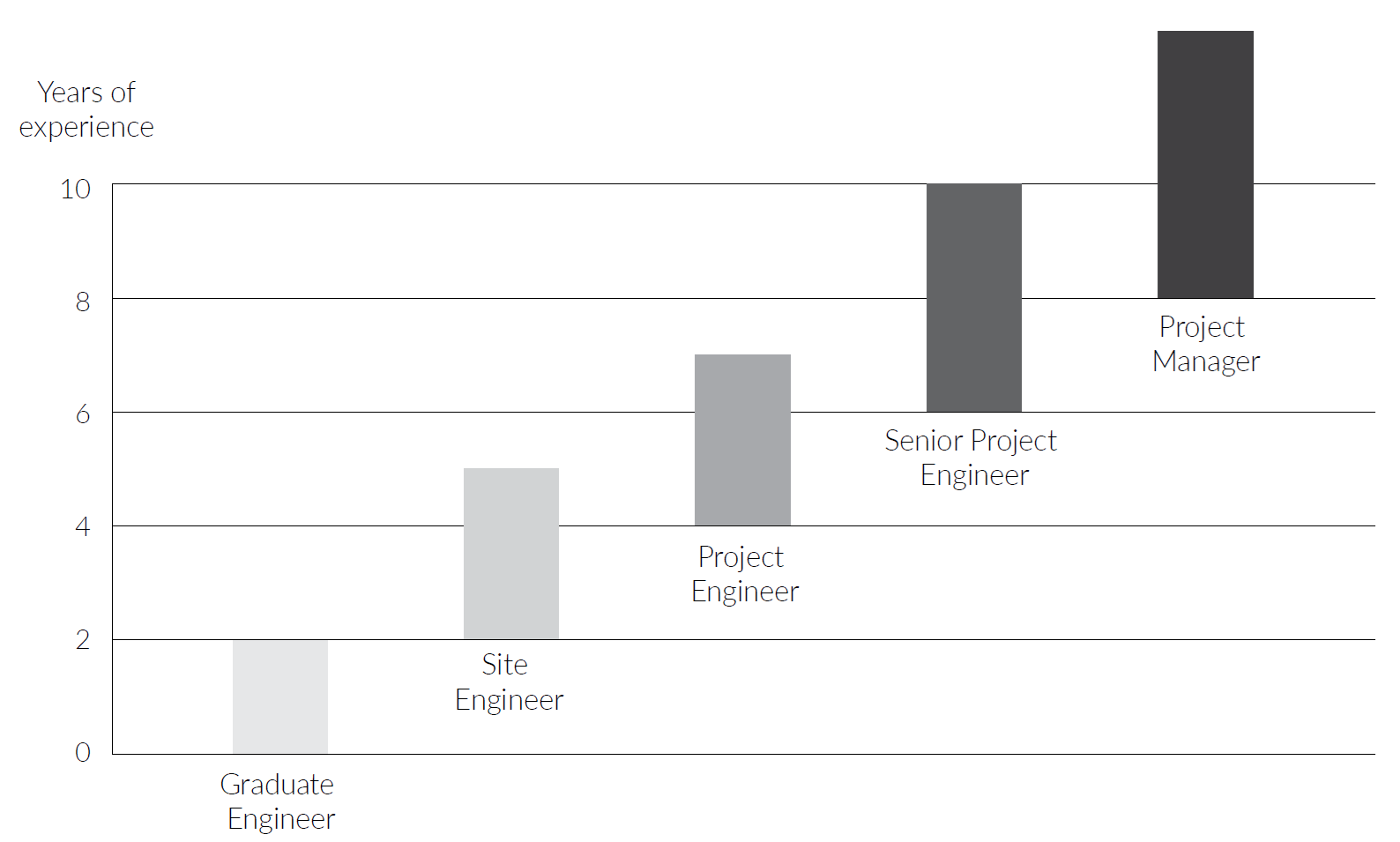
A Structured Yet Flexible Framework
The career stages outlined here represent indicative experience bands that reflect the typical progression required to build the skills and knowledge necessary for each role. While these stages provide a useful benchmark, they are not rigid or universally fixed. Different organizations may adopt varying titles or slightly adjusted expectations depending on their structure, sector, or regional practices.
Importantly, these stages serve as a reference guide, helping engineers understand where they stand and what is required to advance to the next level.
The Engineering Career Path
1. Graduate Engineer (0–2 years)
At the entry level, Graduate Engineers are in a learning-intensive phase. They focus on:
- Applying academic knowledge to real-world problems
- Developing fundamental technical skills
- Understanding workplace processes and standards
This stage is characterized by close supervision, mentorship, and rapid skill acquisition.
2. Site Engineer (2–5 years)
As engineers gain experience, they transition into more hands-on roles:
- Managing on-site activities and coordination
- Ensuring quality control and safety compliance
- Communicating with contractors and stakeholders
This stage emphasizes practical problem-solving and operational responsibility.
3. Project Engineer (5–7 years)
At this level, engineers begin to take ownership of project components:
- Planning and executing technical aspects of projects
- Coordinating multidisciplinary teams
- Managing timelines, costs, and resources
The role requires both technical expertise and growing leadership ability.
4. Senior Project Engineer (7–10 years)
With deeper experience comes greater accountability:
- Leading major project segments or entire projects
- Mentoring junior engineers
- Making critical technical and strategic decisions
Professionals at this stage are expected to demonstrate strong leadership, advanced technical judgment, and a comprehensive understanding of project delivery.
5. Project Manager (10+ years)
At the highest level in this framework, Project Managers oversee the full lifecycle of projects:
- Strategic planning and client engagement
- Financial and contractual management
- Leading large teams and ensuring successful project outcomes
This role blends leadership, business acumen, and technical oversight.
Beyond Titles: A Continuous Journey
It is worth noting that external bodies and professional institutions may use slightly different terminology. For example, some organizations include the term “construction” in titles such as “Construction Project Engineer.” However, regardless of naming conventions, the essence of progression remains the same: growth through experience, responsibility, and capability.
Why This Matters
For engineers, understanding this pathway provides clarity and motivation. For employers, it offers a framework to:
- Develop talent systematically
- Align roles with competencies
- Support career development and retention
Ultimately, career progression in engineering is not just about moving up—it is about building depth, expanding impact, and continuously evolving in a demanding and rewarding profession.